A Note on Sources
This book draws primarily from the canonical Hebrew scriptures. Several chapters engage the Book of Jasher — cited in the Bible itself in Joshua 10:13 and 2 Samuel 1:18 — as a source of ancient narrative tradition that illuminates the biblical text without displacing it. The Epilogue draws on the Book of Judith, preserved in the Catholic and Orthodox biblical canons and consistent in every essential way with the patterns the canonical texts themselves keep insisting upon. The structural readings offered throughout — the inversion principle, the garment thread, the Forerunner pattern — are the author's own synthesis. They are offered not as the final word, but as one coherent reading of a pattern that refuses to stay silent.
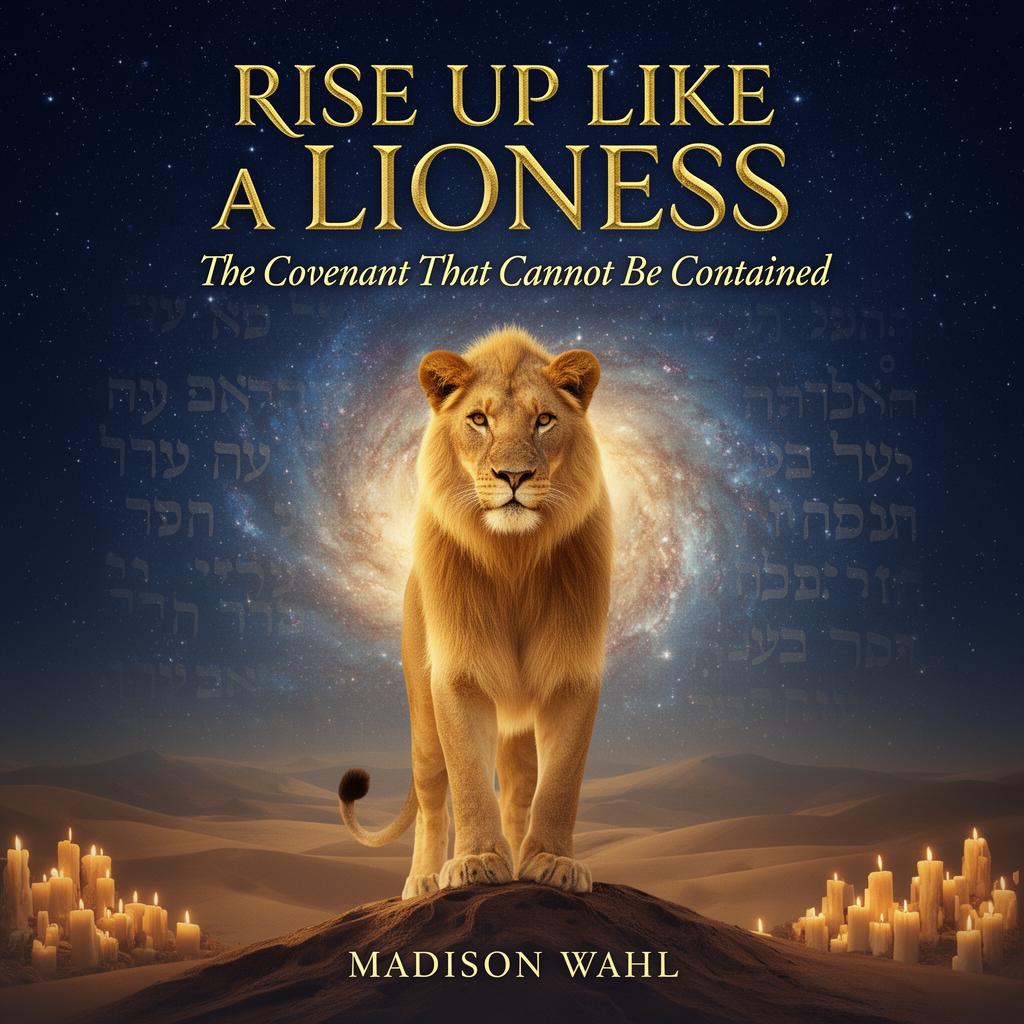
The Covenant That Cannot Be Contained
A book for the woman the opposition underestimated.
The enemy never curses what he doesn't fear. Rise Up Like a Lioness traces a single unbreakable pattern woven through the entire biblical narrative — every system built to contain, diminish, or erase the covenant people has become, without exception, the instrument of their elevation.
This is not encouraging theology. It is the most structurally consistent feature of Scripture — from Rikayon's death tax to Balaam's hired mouth to the horses and chariots that became the floor of the Red Sea.
Read it to understand the pattern. Live it to become the proof.
Trace the Pattern
Four parts. Twelve chapters. One unbreakable thread from Egypt to the song on the other side of the sea.
The Archetype of the Exploiter
The Spirit of Egypt
Rikayon, and the Architecture of Exploitation
How a cunning outsider engineered the first systemic oppression of a people — and what it reveals about the spiritual anatomy of every exploitative system since.
The Smile on the Face of Betrayal
Laban, and the Covenant Insider Who Exploits
The most dangerous exploiter is the one who speaks the language of covenant while dismantling it from within.
The Prophet for Hire
Balaam, and What Happens When Gifting Serves Itself
What Balaam's story reveals about the forerunner who turns mercenary — and why the curse always becomes a blessing anyway.
The Women Who Held the Line
The First Act of Civil Disobedience
Shiphrah and Puah, and the Midwives Who Feared God
Two women whose names Pharaoh never learned changed the trajectory of redemptive history with a single, quiet act of defiance.
The Woman at the Crossroads
Tamar, and the Justice That Would Not Be Denied
Tamar did not seek revenge. She sat down at the crossroads and let the covenant do what covenants do.
The Chosen and the Overlooked
Rachel and Leah, and the Two Faces of Covenant Faithfulness
One was loved and barren. One was overlooked and fruitful. Both were essential. Neither was wasted.
Most Blessed of Women
Jael, Deborah, and the Women Who Ended What Would Not End
A nine-hundred-chariot war ended in a tent. The weapon was already in her hand.
The Name She Buried and the Crown She Wore
Esther, and the Covenant Hidden in Plain Sight
Esther is the proof that the inversion principle does not require a miracle in the sky. For four years she carried a hidden identity — Hadassah buried under a Persian name — inside the most powerful palace in the ancient world. Haman built a seventy-five-foot gallows for Mordecai. He hung on it himself. The king's insomnia did the rest. This chapter traces the most architecturally precise expression of the oppressor-becomes-the-instrument pattern in all of Scripture, and the sentence at the center of it all: Im avadti avadti — if I perish, I perish.
The Formation of the Covenant Carrier
Twenty Years and a Limp
Jacob, and the Night That Renamed Him
You do not walk away from the formation the same person who entered it. That is the point.
The Pit, the Prison, and the Palace
Joseph, and the Descent That Was Always an Ascent
The stripping is not the interruption of the story. The stripping is the story.
The Long Way to the Burning Bush
Moses, and the Wilderness That Was Always Preparation
Forty years on the backside of a desert is not wasted time. It is curriculum.
The Lioness Rising
The Night the Gods of Egypt Died
The Plagues, the Passover, and the Plundering of Egypt
The final confrontation was never between Moses and Pharaoh. It was between the God of the covenant and every false system that claimed authority over His people.
The Tambourine You Are Already Carrying
Miriam, and the Song on the Other Side
Miriam picked up the tambourine before the sea opened. She already knew how the story ended.
The Final Word
The Woman They Didn't See Coming
Judith, and the Final Word on What the Covenant Produces
One woman. One tent. One sword that was already there. And the whole country was safe for a generation.

Madison Wahl
Author · Speaker · Theologian
Madison Wahl writes at the intersection of covenant theology, biblical typology, and the formation of identity. Her work is built on a single conviction: that Scripture is not a collection of inspiring stories but a structurally coherent narrative whose patterns are still operating — and that understanding those patterns changes everything about how you read your own life.
“The lioness does not lie down until the work is finished.”